
Part of the guide: Blog Traffic
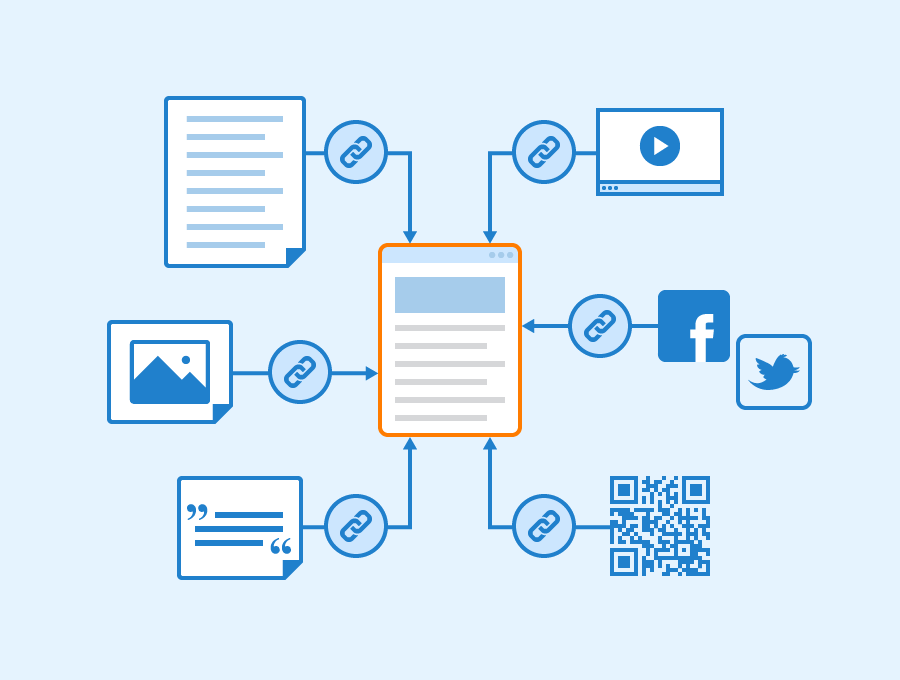
Every Internet Marketer struggles with traffic generation at one time or another. There are A LOT of traffic generation strategies, some free and some paid. Paid marketing is great, it really is. BUT – there’s one problem; it can get very expensive. A simple PPC campaign can put you thousands of dollars in debt; I’ve personally lost a few grand to Google Adwords.
My point is that with any paid marketing, it’s hard to find a profitable ad campaign… And even if you do find a profitable campaign, you don’t know how long it will last for. Then there’s free traffic. There are a whole bunch of free traffic generation strategies, above all is SEO. If you’re not familiar with search engine optimization then why are you reading this article? (Go look it up)
Anyway, the problem with SEO is building backlinks. Backlinks either cost a lot of money or a lot of time. If you’re not “in the know”, a backlink is basically when another site links to yours. There’s also some skill involved with link building, but it’s mainly time or money. Like most people, I don’t have hours spare each day to build links or do any site promotion.
So I outsource a lot my SEO work, and I also AUTOMATE a lot of it. That’s what I wanted to talk about, 4 simple ways you can use to build instant backlinks for your website or blog. Really, this is only going to work if you’re building a blog on WordPress. Anyways, here they are:
- Ping.Fm (Checked as of July, 2024)
As you should already know, by posting on the top social networks you can get kick ass backlinks and lots of link juice. Ping.fm allows you to manage and post to all of your social networks from 1 place. Right now Ping.fm integrates with just over 30 social networks and several web2.0 sites. Using Ping.fm you can syndicate your blog posts or any URL’s you like to the 30 sites Ping.fm submits to.
All you have to do is signup, connect your 30 accounts and syndicate your site’s content as you publish. You can also use Ping.fm to build links to any website, blog or even your other backlinks. Click here to checkout Ping.fm. It’s very straightforward and you’ll find tons of tutorials on using it if you need any help.
Hello.txt is very similar to Ping.fm, it submits to most of the same sites, but a few more. I think right now Hello.txt submits to around 50 sites so it’s the better version of Ping.fm. However, Ping.fm is significantly more popular. To get instant backlinks from Hello.txt all you have to do is register on the 50 odd sites it submits to and connect them.
It’s stupidly simple to set up so I won’t bother explaining. Once your accounts are all connected to Hello.txt, you just have to log in and submit a snippet of text along with the URL you want to promote. Hello.txt will then syndicate the snippet onto all of the sites you connected to your account.
You were never meant to do this alone
Reading this changes nothing. Doing it with people who show up changes everything. That is the whole difference between the people who transform and the people who keep starting over.
Start free →If you’d like to automate the process completely, you can use Friend Feed. Friend Feed is a service that allows you to automatically feed your Hello.txt account by using RSS feeds. If you input your blog’s RSS feed into Friend Feed, whenever it gets updated with new content the content will be syndicated through Hello.txt onto all of the connected sites. Click here to checkout Hello.txt.
>>> Click Here For Part Two <<<

4 simple ways to generate instant backlinks, backlinks, free traffic generation, generate backlinks, generate instant backlinks, instant backlinks, kick ass backlinks, traffic generation, traffic generation strategies, ways to generate instant backlinks
Comments (carried over from the previous site)
Exam Results, May 19 2012, 13:16
Awesome way of creating an instant backlink. Pig.fm is really a great site. Thanks for the share.
Three posts a day. One email a day.
Everything I publish, in one short daily email. Real numbers, no hype, unsubscribe in one click.
Come do the work with people who show up
Not another course you finish alone and forget. A community that is there the next morning, and the one after that. Free, forever. About a minute to join, then come do the first challenge with us.
Join the community, free →



No numbers anywhere on what this syndication actually does to rankings or traffic, just “kick ass backlinks and lots of link juice.” Posting to 30 sites automatically sounds like scale, but scale of what — do any of those 30 profile pages actually get indexed, or is this volume with no measured effect?
This is exactly the kind of tool-stacking that would’ve eaten a week of my life setting up thirty accounts and never actually publishing the post the links were supposed to point to. Connecting the accounts becomes its own project, and the actual content — the thing worth linking to — waits.
Davey, we had the exact same trap thirty years ago, just with fax blast services instead of software. Tools change; procrastination dressed as prep doesn’t.
Davey, thirty accounts to set up on top of an actual job is the part that gets me. This reads like it was written by someone with an entire day to hand over to account creation. Some of us have four hours after a night shift, not a project week.
Nia, I hear that. Running the diner all those years, anything that promised to save time but cost me an entire evening to set up first was never actually free — it just moved the cost from money to hours I didn’t have either. This reads the same. “Instant” backlinks that take a week of account setup before the first one shows up.
Nia, that’s exactly why I’d script the account creation instead of doing it by hand — even a basic form-fill macro cuts the thirty-signup slog down a lot. Doesn’t fix the four-hours-after-a-shift problem entirely, but it’s the difference between a lost evening and twenty minutes checking a log file.
Yuki’s asking the right question here. Drawn as a process, the way I’d map any workflow: the input is one blog post, the throughput is roughly thirty automated syndication posts across whatever accounts got connected, and the claimed output is “link juice” and traffic — but nowhere is there a failure-point analysis, which is the part that actually matters in a diagram like this. What happens when one of those thirty sites stops indexing profile links, or changes its terms, or the syndication service itself simply shuts down one day, as apparently later happened? The entire chain runs through a small number of external services you don’t control, which means the throughput of this whole system depends on infrastructure the post treats as permanent. It wasn’t.
Half these tools are flagged discontinued in the piece itself. Does the tactic still work with whatever replaced them, or did it die with the tools?