The Google Panda Fiasco And The “Moronic” Google Penguin Update
Editors Notes: This post was originally published on 2012. As it is now several years old, please be aware that some of the links and references may no longer be active or relevant. We apologize for any inconvenience this may cause and appreciate your understanding.
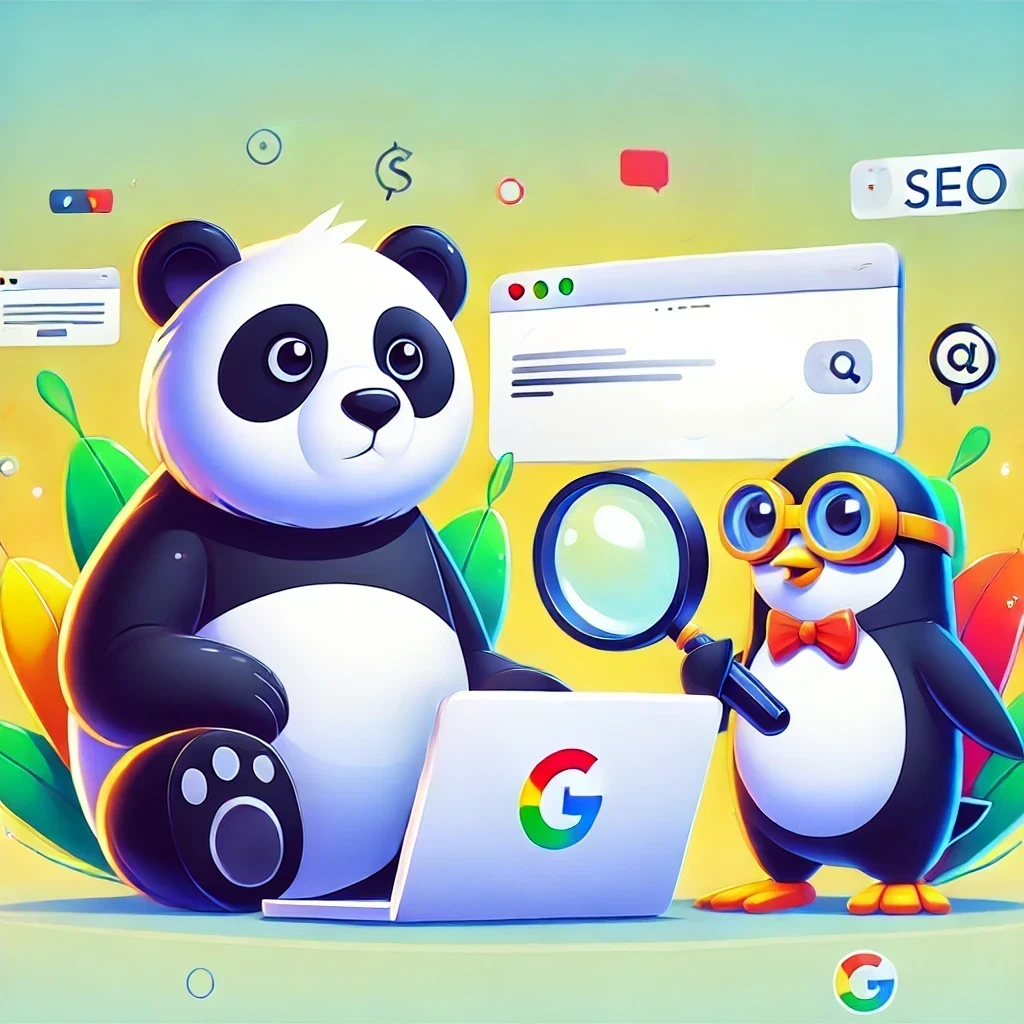
The other day Google released yet another Google Panda update. Panda 3.3, 3.4 or maybe it was even panda 3.5? Soon after they released what they’re calling the “webspam algorithm update” which they later named the “Google Penguin Update”.
The specific names don’t really matter; what matters is how they affect you. (Quick Note: this post isn’t about panda/penguin specifics, it’s about Google, algorithm changes and the future of online marketing – a little more generic)
According to Google, the last public update was Panda 3.4 which they officially launched on March 23. But since then there’s been a dramatic change in the algorithm. A change that was supposedly designed to fight spam and improve the quality of search results. (The damn Penguin)
Unfortunately, the Penguin update has been the last nail in the coffin for thousands of people around the globe. A month or so ago I wrote a post about a previous Panda update that was said to affect just 1% of search queries.
At the time hundreds of thousands of webmasters around the world proved that statistic to be very wrong. The results were catastrophic. And now… Matt Cutts has said this update will “only affect 3% of search queries”. To that I say what a load of BS.
If you log on to any online marketing related forum or even the Google Webmaster’s forum itself, you’ll find thousands upon thousands of webmasters complaining about this update. It was supposed to target sites that were keyword stuffing and using other dodgy black hat tactics. (It has and hasn’t)
When really all its done is brought terrible results to the top of Google and pushed great websites to the bottom. Ok – so it has done some good. Many great sites have risen, but countless others have lost their rankings. In my opinion collateral damage is not ok. The big picture is this:
Google has pushed all the BRANDS to the top. Brand sites are now dominating, more so than ever before. And the big thing that’s got so many marketers outraged is this: niche sites have been killed. Here’s a quick list of sites that have taken a hit:
Those are some pretty huge numbers, but only 3% right? LOL
Really, there are only three types of sites. (Minus article directories and web2.0’s)
- Brands
- Niche Sites
- Authority Sites
As you probably already know, a huge percentage of Internet Marketers make their money from niche sites. Niche sites are generally sites that are built to make money. So it seems Google is out to destroy our incomes and improve search results too?
All jokes aside… Niche sites are typically sites built around a single topic and most of the time they are between 10 and 300 pages.
The problem is a lot of niche sites are full of terrible content. Usually they are 5-10 page sites built for the sole purpose of ranking for 1-10 keywords and making a small profit. Internet Marketers have been building these sites for years because they are guaranteed earners.
Over the past few years however, marketers have gotten lazy and built terrible websites full of outsourced content they know nothing about. Most of those sites have been hit, which is fair enough. But what about the excellent niche sites? What about the sites with 10-300 pages of superb content that genuinely helps people?
Yep – those sites have also been crushed which makes me furious. The funny thing is, black hat SEO’s have been badly penalized. Which is fair enough to a degree. I believe that webmasters should be able to use whatever SEO they like to blast their sites to the top; just as long as they provide value and deserve to rank there.
It’s not just niche sites that have been hit, individual blogs and small businesses have also been destroyed.
The problem is it’s so damn random. Countless white hat SEO users have been hit. People who’ve followed Google’s rules to the T; they’ve been spanked. I was actually talking to a woman the other day who spent 4 years of her life building a health and beauty blog.
The blog had over 600 pages of excellent content. After this update she practically lost every single ranking and her traffic came to a halt… literally overnight. Not cool at all Google…
So niche sites have been penalized badly and thrown to the bottom of the pile. They are ranking in third place despite their individual quality or link profiles. Next authority sites. It’s kind of difficult to define authority sites as they are essentially big niche websites.
Authority sites are enormous sites that specialize in one broad topic. Sites that cover everything on a topic and generally have excellent content. There’s a fine line between authority sites and brand sites. Authority sites as of this last update, have been placed below brand sites.
I used to have a couple of authority sites in obscure niches, they each had 300+ blog posts and were incredible resources for their visitors. I used white hat SEO on them in terms of link building. Obviously white hat link building doesn’t technically exist. But it’s what I call white hat link building…
I built manual backlinks using the 1 article = 1 backlink principle.
I only did guest blogging, article marketing, web2.0’s and social bookmarking + social signals. While those sites haven’t been sandboxed or thrown to the bottom, they’ve lost a crap load of traffic. All because of Google’s stupid algorithm changes, especially the damn penguin.
My point is, even though those sites followed the rules to the T; they’ve lost a load of traffic and rankings. Which to me is completely unfair. So niche sites have been killed off big time and so have authority sites. The majority of medium to large authority sites have lost a substantial percentage of their traffic if not all.
The problem is this; it never seems like Google targets certain websites. Small sites, big sites, sites using black hat SEO and sites using white hat SEO – they all get hit. Many awful sites seem to just slip through the cracks and even thrive while others get demolished.
>>> Click Here For The 2nd And Final Part
Comments
Will Vargas, April 28 2012, 14:45
This update has really shaken things up. My niche site has seen a significant drop in traffic. I’ve always followed best practices, so it’s frustrating to see my hard work affected so drastically. I hope Google addresses these issues soon.
Linda Mondo, April 28 2012, 15:20
Thank you for breaking this down, David. It’s been confusing trying to understand these updates. I’ve noticed some of my competitors rising while my site has dropped. I guess it’s time to re-evaluate my strategies and make some changes.
Mark Johnson, April 28 2012, 16:00
The randomness of these updates is what bothers me the most. Some low-quality sites are still ranking high while well-maintained ones have been hit hard. I appreciate your insights and hope that Google provides more clarity on these changes soon.
Emily Davis, April 28 2012, 16:45
Great article, David. It’s disappointing to see quality niche sites being penalized. I’ve always focused on providing valuable content, but it seems like that’s not enough anymore. Your advice on navigating these changes is very helpful.
Michael Brown, April 28 2012, 17:30
I’ve seen a mix of results with this update. Some of my sites have improved, while others have tanked. It’s clear that Google is pushing for higher-quality content, but the execution seems flawed. Thanks for the detailed analysis and tips.
Sophia Wilson, April 28 2012, 18:15
This has been a challenging time for many webmasters. It’s tough to see years of work being undermined by these updates. Your article provides some much-needed clarity and actionable steps. I’ll be implementing your suggestions right away.
James Miller, April 28 2012, 19:00
I agree with your points about the unfair impact on niche sites. It feels like Google is favoring larger brands, which isn’t fair to smaller players. Your insights are valuable, and I hope Google makes some adjustments to level the playing field.
Linda Martinez, April 28 2012, 19:45
Thank you for this informative post. The updates have been a rollercoaster for my business. It’s good to know that I’m not alone in facing these challenges. Your advice on focusing on quality and adapting to changes is spot on.
David Wood, April 28 2012, 20:30
I appreciate all the feedback and comments. It’s clear that these updates have had a significant impact on many of us. Let’s continue to share our experiences and strategies to navigate these changes together. Stay strong and keep pushing forward!