
Part of the guide: Blog Traffic
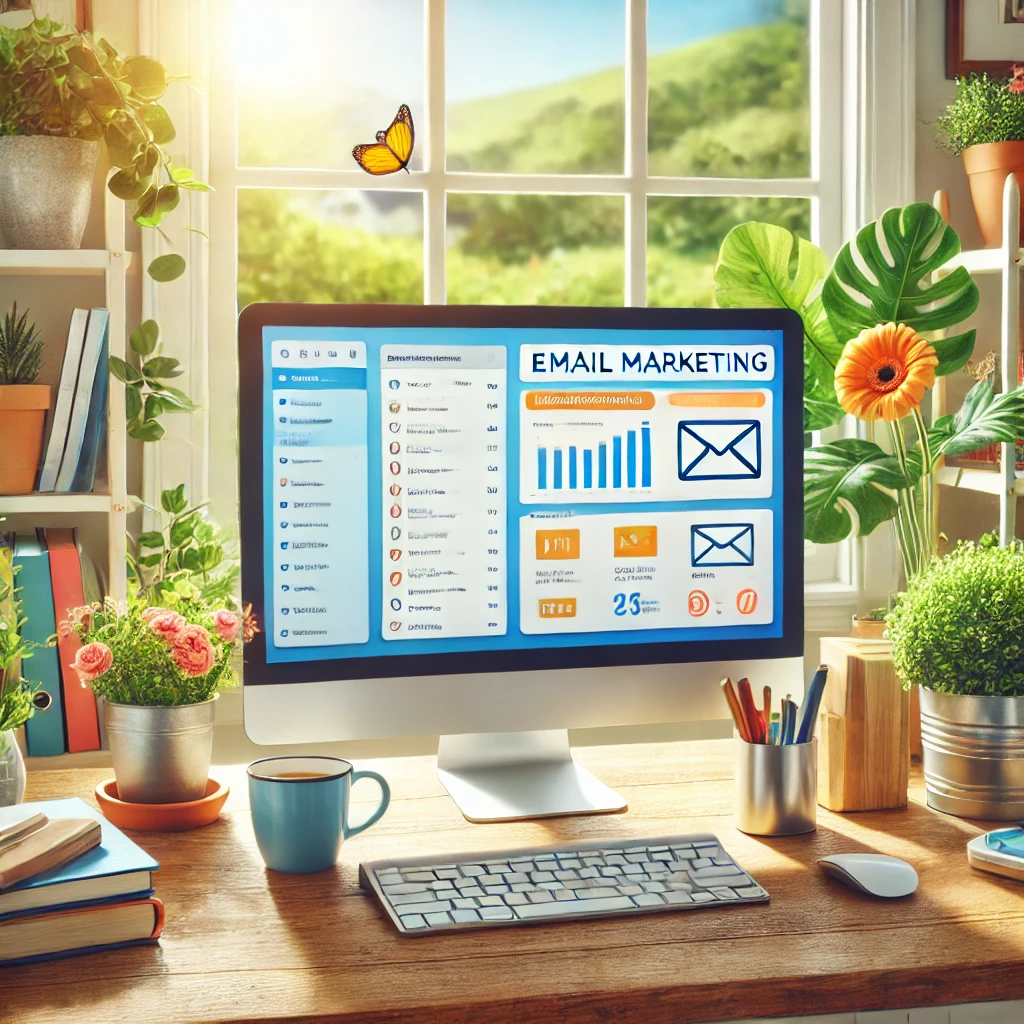
Email marketing is by far one of the best tools just about any blogger or webmaster can leverage to build their blog. The problem is most people just don’t know how to use email marketing.
So if you are one of those people who just doesn’t know how to use email marketing, you’ll get a kick out of these tips. Let’s begin:
- Market Your List As A Blog Newsletter
Most blogs offer some kind of free product in return for their visitor’s personal email addresses. Even if your visitors love your content; they won’t opt-in unless they are fully assured they won’t be bombarded with sales crap. You have two options. You can offer a free product in return for your visitor’s emails or just market your list as a newsletter.
By offering a product (free report/videos) in return for an email without telling them exactly what they’re getting AFTER – you’ll decrease subscription rates. If you market your list as a simple blog newsletter you’ll solely capture the visitors who enjoy your content, like you and aren’t just subscribers for the sake of a free download. An opt-in form with the title “Blog Newsletter” and a byline “Join the newsletter for blog updates, tips, tricks and more” works.
2. Set Expectations
This tip is key! So many subscribers are either overwhelmed or disappointed by the number/quality of emails they receive from online marketers or even blogs. To reduce unsubscription rates, set expectations early on. The first step towards setting expectations is your opt-in form. You must clearly state what visitors will get and receive on an on-going basis if they opt-in to your list.
On top of that, you should set expectations in the first email that goes out to new subscribers, the welcome email. The welcome email is by far the most important email that ever gets sent out. Depending on your blog, this can work in different ways. If you run a personal blog you can introduce yourself first in the email.
Next you should deliver any promised opt-in bait (i.e. a free report) and then you should set expectations. You can say something along the lines of “Welcome to the list, you’re going to be getting regular updates from me whenever I post great content on the blog. Sometimes I’ll email you once a month, others 3 times a day. Also, from time to time I do send out the occasional product recommendations”. Set expectations so you don’t piss anyone off!
3. Don’t Change Anything!
People don’t really like change. Not when it comes to the TV they watch, the places they live, eat and even the emails they receive. What I mean is you need to develop your own unique identify. Your blog needs its own identify and so do the emails you send out promoting it. You should keep the emails all the same length, in the same font size, color and template. It’s also a good idea to personalize them with your blog’s logo or something similar.
4. Promote Your Blog
The whole reason I’m guessing you started using email marketing for your blog was to build a community. That can all be done in good time, but don’t overdo it. Here’s the thing, you might publish a blog post 5 times a week, maybe 3 days a week or just twice a week. With email marketing you really have to pick your moments. Meaning don’t send your subscribes to every blog post you publish.
Only feed them the good stuff! Your subscribers are very valuable and the more times you mail – generally the less responsive they will be. Now that’s not exactly true because it depends on your emails – but if you send every day of the week your subscribers will start to resent you. So what I recommend people do is email their subscribers about their best blog content. Once a week is enough really. If your subscribers want to read everything you publish, they can subscribe to your RSS feed. (Tell them that)
You have been paid late before
You have watched the number on the dashboard not match the number in your account. What is different now is simple: it settles on a public contract you can check yourself, not a dashboard I control.
Read the contract →Most participants earn little to nothing. No income is guaranteed. You can verify every payout on the public smart contract.
5. Segment Your List
Segmenting your email list is something few people actually do. If you’re using Aweber (checked as of July, 2024) or a similar autoresponder then segmenting your list is extremely easy. You can segment your blog subscribers into 100 different lists. You can segment them based on their location, time zone, activity or more. I personally start by segmenting the people who open most/if not all my emails. I stick them in a private list so I know whenever I need fast traffic – I can email them, they’ll love it and my other subscribers won’t be pissed off.
If you segment your email subscribers into 3 different main time zones, you can know exactly when to send your emails. Let’s say after extensive research you find 90% of opens happen at 7pm and you have 3000 subscribers. For this example, let’s say they are all in 1 of 3 time zones. After a little work you could segment the list into 3 based on the different time zones. Then send the emails promoting your new blog posts at 7pm in each time zone until all 3 emails are sent. Segment, segment and segment some more!
In Prosperity,
David Wood
P.S. Leave me your thoughts, comments and questions below!

Comments (carried over from the previous site)
John Doe, January 15, 2021, 14:32
This is a very informative post! Thanks for sharing.
Jane Smith, February 2, 2021, 09:45
I never thought about segmenting my email list by time zones. Great tip!
Three posts a day. One email a day.
Everything I publish, in one short daily email. Real numbers, no hype, unsubscribe in one click.
Get paid 100%, on-chain, the second the sale clears
Most affiliates earn little, and that is disclosed up front. The difference here is not a promise about what you will make. It is that you can verify every payout yourself, on a public contract, in about twelve seconds.
See how the payout works →Most participants earn little to nothing. No income is guaranteed. You can verify every payout on the public smart contract.




The ‘set expectations’ tip is the one worth sitting with. I ask coaching clients to write their welcome email before anything else, not after, because it forces a decision about what kind of relationship they’re offering before a single person opts in. What would your welcome email say about you if a stranger read only that?
What Simone’s describing has a name in the literature — it’s basically the psychological contract, the unwritten expectations both sides assume in an exchange even though neither states them explicitly. Employment research has shown violating it, getting something different from what was implicitly promised, predicts disengagement better than the actual terms of the deal do, sometimes by a wide margin. A welcome email is just a contract you’re choosing to make explicit instead of implicit, in writing, at the one moment the reader is paying closest attention. The post is right that this matters, though it undersells how much damage a broken promise later in the relationship does compared to an unclear one at the very start, when there was nothing yet to be disappointed by.
Reading the ‘set expectations’ section made me think of subscription boxes, weirdly — the ones that fail are almost never the ones with bad products, they’re the ones where you don’t know if a box is coming this month or not. Not knowing is worse than a disappointing box. Might be the same mechanism running under email lists, book series, gym memberships, anything with a recurring promise. The interesting question isn’t email marketing at all, it’s why humans tolerate bad far more easily than uncertain.
Segmenting into three time zones and picking the perfect send time for each is exactly the kind of task I’d disappear into instead of writing the newsletter that’s actually overdue. Sound advice. I already know which part I’d use as a hiding place.
Davey, I hid there too. Segmenting only works once you’ve already proven you’ll send something every week without it.
The best case against the ‘don’t change anything’ advice is that consistency without any testing is just habit dressed up as strategy — you could send the same broken template for two years and call it branding. But steelmanning the post’s actual point: readers open email based on pattern recognition faster than content quality, so a recognizable subject line format probably does more for open rates than most people’s clever hooks. I’m not fully convinced, but it’s a stronger argument than ‘people don’t like change.’
Tried the once-a-week rule for four months. Held up until week nine, then opens slid anyway, same slot, same format, no clear cause. Turned out my ‘best content’ had gotten repetitive in structure even as the topics changed.
On the company side we obsessed over exactly this — template consistency wasn’t really about branding, it was about reducing the number of decisions a new subscriber had to make about whether to trust an email. Every inconsistency, even a font change, added a split-second of ‘wait, is this still them?’ I can’t speak to whether it moves numbers as much internal teams insisted it did, but the instinct behind tip 3 was taken very seriously where I sat.
Renata, I think what’s being missed when people wave off tip 3 as boring is exactly what you’re describing — that split-second hesitation compounds across a list over months. A subscriber who has to re-verify trust every email eventually just stops opening, quietly, without unsubscribing or complaining. You’d never see it in any single week’s numbers. It only shows up as a slow decline nobody can point to a cause for, which is probably why so many people skip past this tip to get to segmentation.