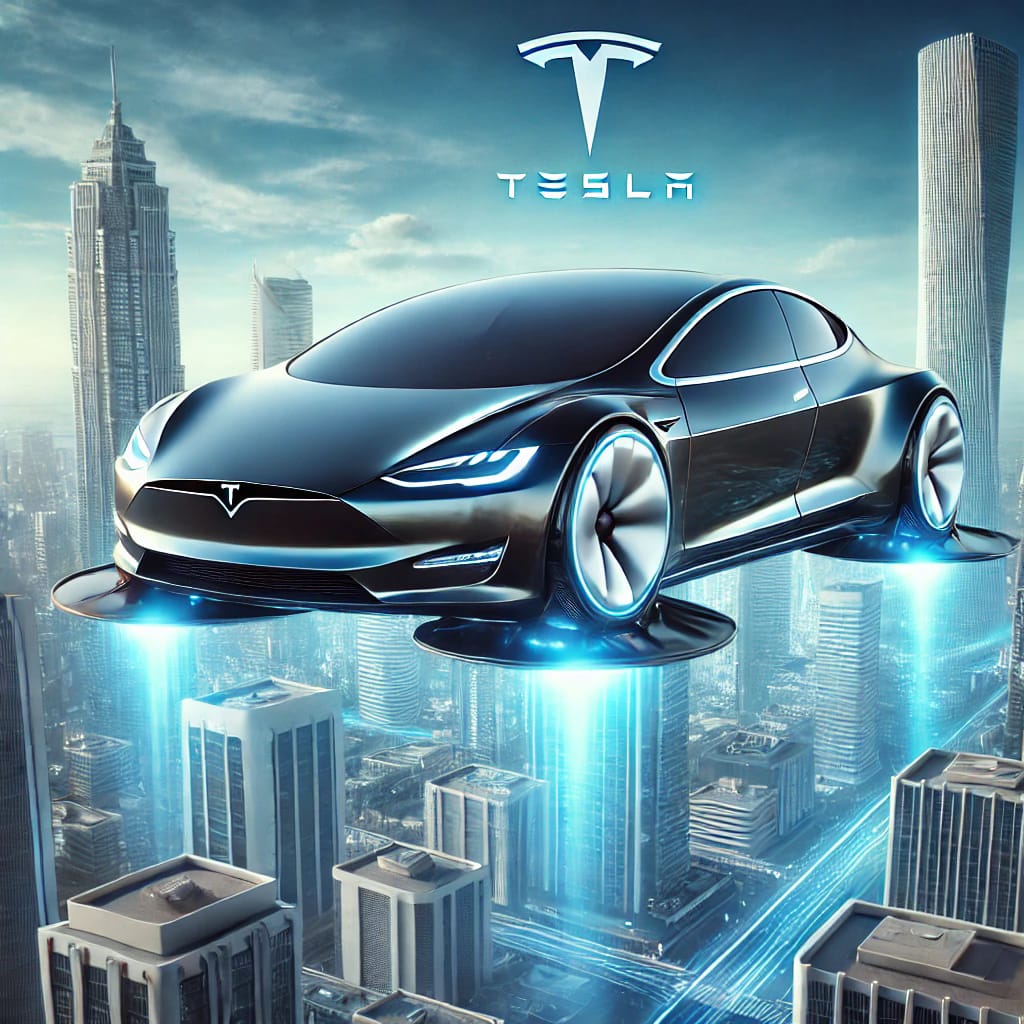
Are The New Jersey Drones Just Elon Musk Testing The New Tesla Roadster? Yes, Probably.
I only have about 45 minutes to finish writing this post, so it won’t be as detailed as I would otherwise create. Recently there has been a lot of drama in the news and on social media about the drone sightings that have been going on for over a month, originating on November 18th, 2024 in Morris and Somerset counties in New Jersey. Here is some of the information on the drone sightings from Fox News:
I originally heard about this as my brother, Will Wood gave me a call and asked me what I think about it. I do read a lot but don’t really have access to good newspapers here in Costa Rica. Of course, I started to look into it and I watched about 20 videos that my brother referred me to, where there was reporters and government leaders talking about the drones, various photos and videos, and different people giving conspiracy theories about them. To be fair, many conspiracy theories turn out to be true, and I suppose that this blog post is one of them.
It took me about 1.5 hours to come to the conclusion that it is probably Elon Musk testing the new Tesla Roadster. I posted this on Facebook and I think the majority of my friends thought it was a joke.
So what was it that made me come to the conclusion that the New Jersey Drones were Elon Musk testing the new Roadster?
Simple: I sent the drone videos to one of my best friends, Jamie Hudson. Then he sent me back this:
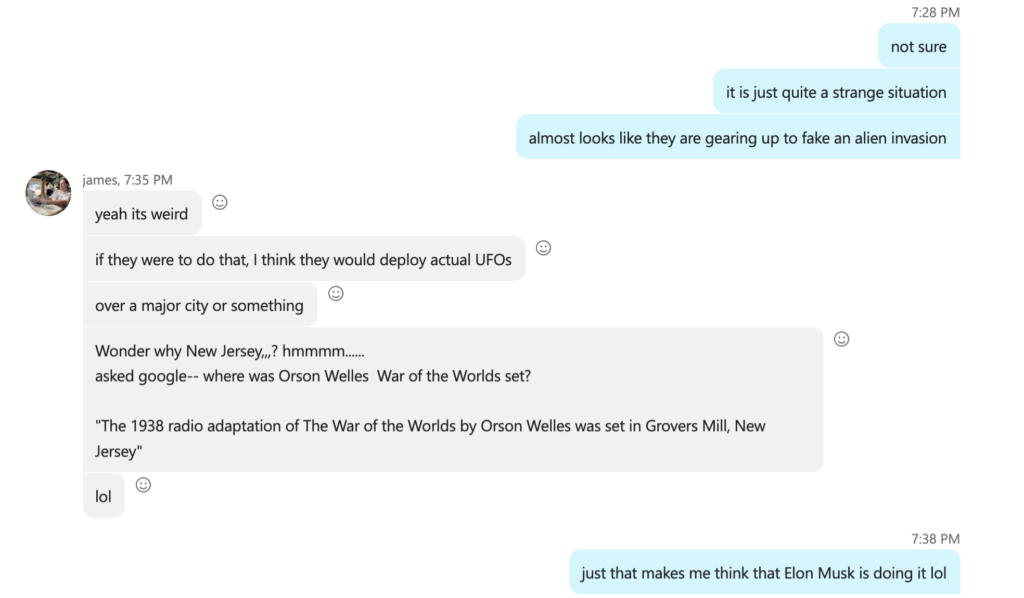
Now you got to understand that I spend a LOT of time reading (an average of 42 hours per week) and last year I read both well written biographies of Elon Musk, one by Ashlee Vance, and the other by Walter Isaacson. So the whole personality of this event literally to me is screaming “Elon Musk” – I could be wrong, but keep reading and you’ll begin to see what I mean.
Back to Grover’s Mill:
While Grover’s Mill wasn’t the exact point of the first sighting, I asked ChatGPT to give me the location of the first 10 sightings with their distance from Grover’s Mill:
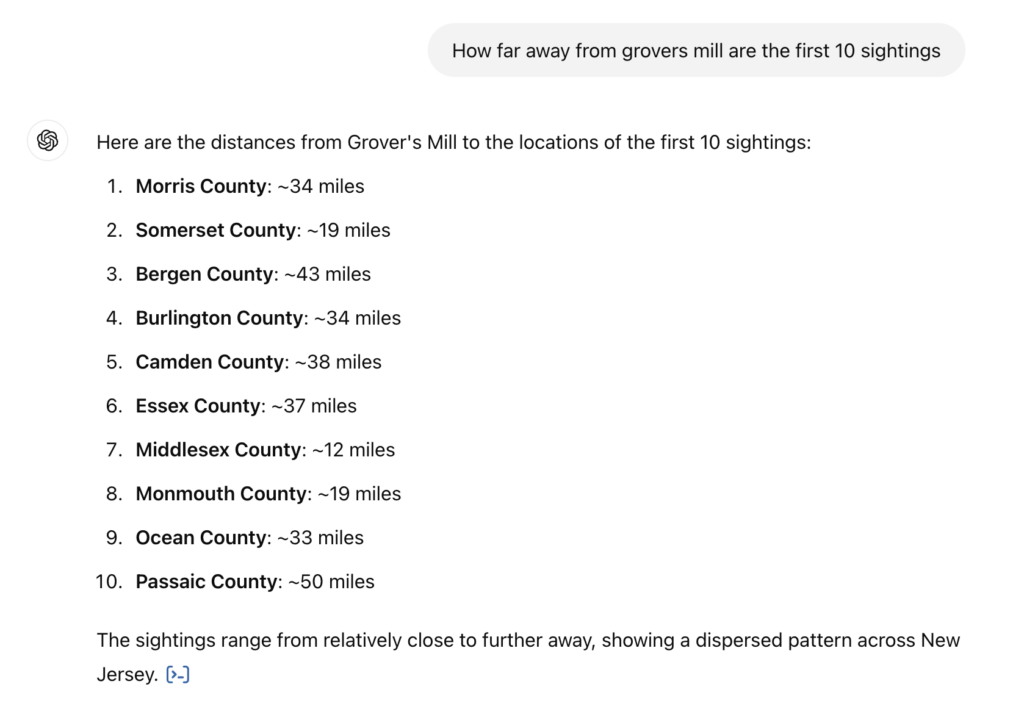
You can see that the first 10 sightings are all relatively close to Grover’s mill. However, Grover’s mill is not at the exact geographic center (Elon wouldn’t want it to be TOO obvious):
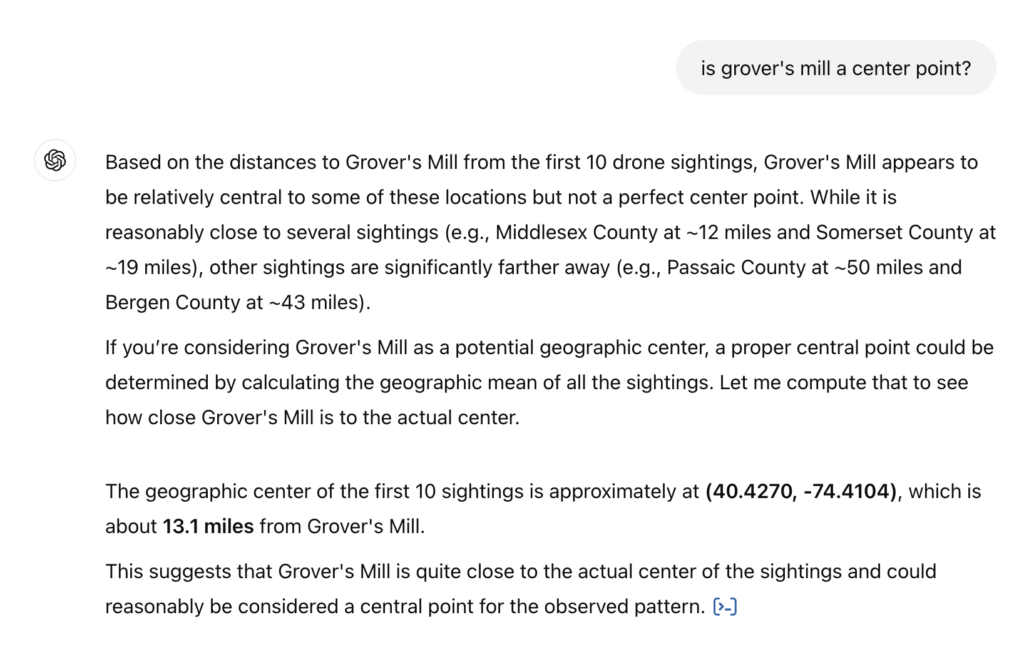
However, it gets closer to the geographic center of Grover’s mill if you calculate it from the first 20 sightings:
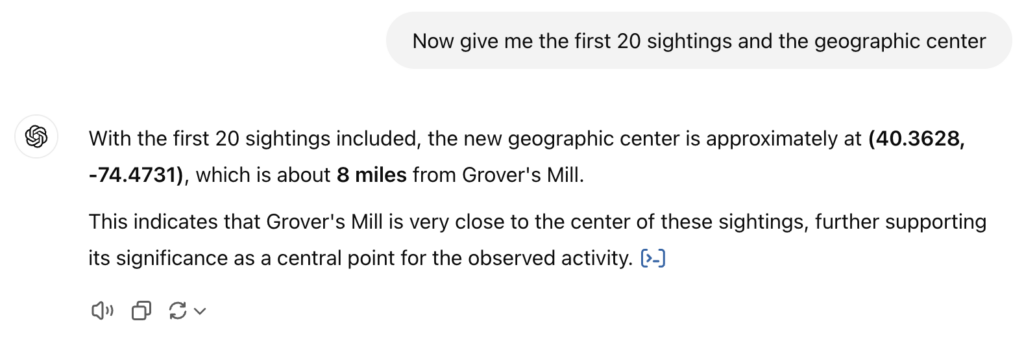
Now obviously correlation doesn’t equal causation and the fact that the centerpoint of the first 20 sightings gives a geographic center of 8 miles from Grover’s Mill (which just happens to be the location of the first sighting in the 1938 radio broadcast of the War of the Worlds by Orson Welles) does not prove that the actual center of the mischief is Grover’s Mill, and that doesn’t prove that Elon Musk is doing it either.
So Let Me Give You Some More Key Points, And You Can Decide If It Is Really Some Evil Elon Musk Plot, Or Not:
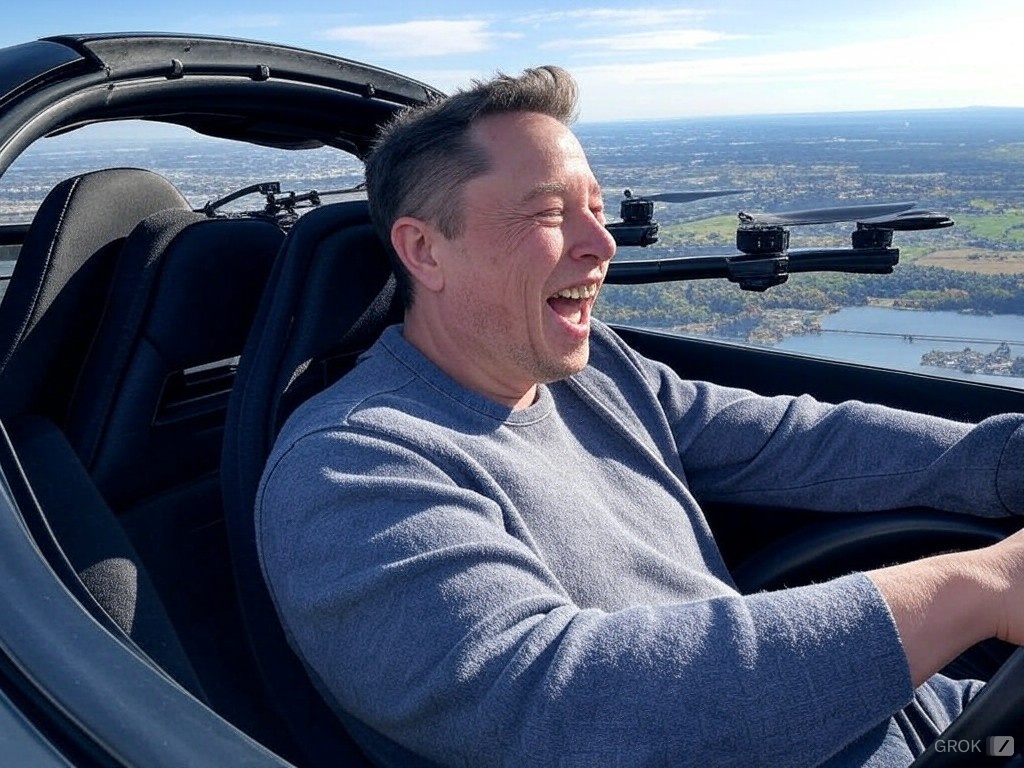
- Special Note: Actual plot by Elon may not actually be very evil. The photo above was made by Grok.
I did some research to find a complete list of decisions that Musk has made based on movies:
Elon Musk’s ventures are deeply intertwined with his passion for science fiction and popular culture, often drawing direct inspiration from these realms. For instance, the Tesla Bot, aptly named “Optimus,” pays homage to Optimus Prime from the Transformers series, while its sleek design mirrors the robots from the 2004 film I, Robot. It’s clear Musk loves turning sci-fi into reality. (dazeddigital.com)
And Tesla’s just getting started—Ludicrous Mode? Straight out of Spaceballs. And Plaid Mode? That’s when Tesla turned the dial up past “Ludicrous” to fully embrace the absurd genius of the film’s “Plaid” speed. Easter eggs in Tesla cars add even more humor, like transforming the driving map into Rainbow Road from Mario Kart or the submarine car display from the James Bond movie The Spy Who Loved Me (1977). These playful nods reflect Musk’s unique blend of humor and pop culture appreciation. (en.wikipedia.org)
The Tesla Cybertruck’s bold, angular design draws heavily from the futuristic aesthetic of Blade Runner (1982). Musk himself said the Cybertruck was his way of bringing Blade Runner to life, capturing the movie’s depiction of advanced technology and futuristic design in every angular detail. He noted that the sharp, angular design was a deliberate departure from conventional car aesthetics, aiming to evoke the cutting-edge atmosphere of the film. Musk has openly stated that the movie’s depiction of advanced technology influenced the vehicle’s appearance, aligning with his vision of combining functionality with an otherworldly, sci-fi aesthetic. (en.wikipedia.org)
SpaceX, Musk’s aerospace venture, also bears the imprint of his sci-fi influences. The Falcon rockets derive their name from the Millennium Falcon of Star Wars fame, symbolizing a bridge between cinematic imagination and real-world space exploration. Musk’s vision for space also echoes Isaac Asimov’s Foundation series, which emphasizes preserving and expanding human knowledge. Musk has openly stated that this series inspired him, saying, “If humanity doesn’t explore the stars, it’s like having a book and never reading it.” (businessinsider.in)
During the Falcon Heavy test flight, SpaceX included a copy of Isaac Asimov’s Foundation series, stored in a crystal disk, as part of the payload. This symbolic act reflects Musk’s belief in safeguarding human knowledge, much like the series’ focus on preserving wisdom to rebuild civilization after a collapse, ensuring the survival of critical ideas for future generations. This shows Musk’s deep respect for Asimov’s vision of saving knowledge for the future. (en.wikipedia.org)
Perhaps the most humorous example of sci-fi inspiration at SpaceX is the pointed design of Starship. Musk directed engineers to make it “more pointy” because of The Dictator (2012), a comedy where the protagonist demands a missile look “more intimidating.” Musk later explained, “I thought it would be funny. It’s not scientifically better, but it looks cooler.” This whimsical decision reflects Musk’s penchant for merging practical engineering with pop culture humor, cementing his image as a tech visionary with a playful side. (space.com)
His fascination with AI and human cognition also draws from sci-fi. Neuralink, Musk’s brain-machine interface company, takes inspiration from The Matrix (1999) and Ghost in the Shell (1995), envisioning a future where humans and machines seamlessly integrate. Musk has said, “If you can’t beat AI, join it,” reflecting the kind of existential themes explored in these films. (inverse.com)
The term “neural lace” used by Neuralink is borrowed from Iain M. Banks’ The Culture series. In the novels, neural lace technology is implanted in the brain, enhancing cognitive abilities and allowing seamless interaction with advanced AI systems. This directly aligns with Neuralink’s goal to merge human and machine intelligence. The aim is to create a future where the mind can interface with technology as naturally as it processes thoughts, bridging the gap between human cognition and machine functionality. In the novels, a neural lace is a device implanted in the brain to enhance mental capabilities and interface directly with technology. This aligns with Musk’s vision of creating seamless human-AI integration. (tbsnews.net)
The Boring Company is another venture where Musk’s humor shines. The Not-A-Flamethrower—a real, functioning flamethrower—was inspired by Spaceballs (1987), where merchandising included “Spaceballs: The Flamethrower.” People loved it—Musk’s way of mixing pop culture fun with wild ideas. Musk has said that the creation of this product was meant to inject some fun and absurdity into his ventures, reflecting his unique sense of humor and engagement with pop culture. “I just couldn’t resist making something so ridiculous,” he quipped in an interview, underlining how the product embodies his playful approach to serious business. Musk’s tunnels and Hyperloop concepts also harken back to futuristic transportation seen in Total Recall (1990) and The Fifth Element (1997), showcasing his sci-fi-driven approach to urban infrastructure. (tbsnews.net)
Musk’s admiration for The Hitchhiker’s Guide to the Galaxy by Douglas Adams is another recurring theme. When SpaceX launched a Tesla Roadster into space, it displayed “Don’t Panic” on the dashboard—a direct reference to Adams’ iconic work. This reflects Musk’s ability to blend whimsy with groundbreaking innovation. (inverse.com)
Even his philosophical outlook connects to literature. The term “Grok,” used for Twitter/X’s AI initiatives, comes from Robert A. Heinlein’s Stranger in a Strange Land (1961), meaning to deeply and intuitively understand. This concept ties directly into Musk’s vision for AI. He envisions machines that not only process data but develop a profound understanding of human behavior, enabling a seamless and intuitive integration between humans and technology. This aligns with Musk’s aspirations for AI to go beyond mere computation and achieve a deeper comprehension of humanity.
Finally, Musk’s overarching vision often circles back to The Culture series by Iain M. Banks, which depicts a post-scarcity society where advanced AI and humans coexist in harmony. Musk has called this series a blueprint for what he hopes humanity can achieve. (businessinsider.com)
These instances highlight how Musk’s love for science fiction doesn’t just influence his ventures—it’s central to them. Whether it’s playful Easter eggs or profound philosophical explorations, Musk’s work blurs the lines between imagination and reality, inspiring a new generation of innovators.
Now Let’s Talk About What Elon Musk Has Said About His New Tesla Roadster:
Elon Musk has a way of making the impossible sound inevitable, and nowhere is that clearer than in his ambitious vision for the new Tesla Roadster—a vehicle that Musk insists goes beyond the conventional definition of a car. Slated for delivery in 2025, the Roadster is shaping up to be much more than just a car (Investopedia). In fact, Musk himself has hinted that calling it a “car” might be selling it short.
This next-generation Roadster pushes boundaries by integrating SpaceX rocket technology, offering performance enhancements that blur the line between automotive and aerospace engineering (Teslarati). With its 10 small thrusters, this vehicle redefines driving by introducing capabilities that feel straight out of science fiction—enhancing acceleration, braking, and cornering to unprecedented levels. These thrusters, available as part of the optional SpaceX package, could enable a 0 to 60 mph time of under one second, a number Musk has teased as both audacious and achievable (InsideEVs).
But Musk’s vision doesn’t stop at earthbound performance. Musk has also envisioned the Roadster hovering, marking a groundbreaking step in reimagining vehicle functionality (MotorBiscuit). Yes, you read that right—hovering. According to Musk, the Roadster could hover about a meter off the ground, effortlessly clearing obstacles while redefining what vehicles can do. “I want it to hover,” Musk joked, “but we’ve got to figure out how to make it hover without killing people—a real engineering challenge” (MotorBiscuit). It’s the kind of audacious ambition you’d expect from someone blending electric car engineering with aerospace technology.
With a staggering range of over 600 miles on a single charge, the Roadster is as practical for cross-country drives as it is thrilling for short bursts of speed (Investopedia). And then there’s the aesthetic. Musk describes the Roadster as a leap into the future—a blend of cutting-edge engineering and sci-fi-inspired design that turns heads and redefines expectations (Teslarati). It’s more than a car; it’s a statement—an electric sports car designed to redefine what’s possible in automotive innovation.
With a $50,000 reservation fee and an anticipated price tag far above its competitors, the Tesla Roadster is designed for a niche market of innovators, visionaries, and thrill-seekers (Investopedia). But for those who can get their hands on one, it promises to be nothing short of revolutionary. As Musk puts it, the Roadster is not just about making a better car—it’s about rethinking what a car can be, merging the boundaries of aerospace and automotive technology to create something entirely new (Investopedia).
Unveiling the Mystery: Are Elon Musk’s Sci-Fi Inspirations Taking Flight?
To bring this to a conclusion, in recent weeks, residents across New Jersey and neighboring states have reported sightings of large, unidentified drones, sparking intrigue and speculation. Interestingly, many of these sightings occurred near Grover’s Mill, the site immortalized in Orson Welles’ 1938 War of the Worlds broadcast—a connection that underscores Musk’s penchant for weaving sci-fi symbolism into his ventures. The historical significance of Grover’s Mill, tied to the widespread fascination with extraterrestrial life and technological marvels, adds another layer of intrigue, aligning perfectly with Musk’s love for culturally resonant and symbolic locations. These drones, some reportedly as large as SUVs, have been observed hovering silently at night, leading to various theories about their origin and purpose. (NYMag)
Concurrently, Elon Musk, the visionary behind Tesla and SpaceX, has been vocal about integrating advanced technologies into his ventures, often drawing inspiration from science fiction. Notably:
- Tesla Roadster’s Rocket Technology: Musk has announced plans for the upcoming Tesla Roadster to feature a SpaceX package, incorporating cold gas thrusters to enhance performance. He has even expressed a desire for the vehicle to hover, stating, “I want it to hover… without, you know, killing people.” (Electrek)
- Science Fiction Influences: Musk’s projects are a love letter to sci-fi classics. Tesla’s “Ludicrous Mode” and “Plaid Mode” pull straight from Spaceballs (1987), while the term “neural lace” from Neuralink originates in Iain M. Banks’ The Culture series. Musk has even cited Blade Runner as a direct influence on the Cybertruck, blending sci-fi aesthetic with functional innovation. These influences strengthen the speculation about Musk’s involvement in the drones, as they demonstrate his ongoing commitment to merging speculative fiction with groundbreaking technological reality.
In light of recent mysterious drone sightings in New Jersey, the Federal Aviation Administration (FAA) has implemented temporary flight restrictions over critical infrastructure areas, effective until January 17, 2025. These measures are precautionary, covering critical areas such as Camden, Jersey City, and Elizabeth, and extending up to 400 feet in altitude. The restrictions aim to mitigate potential security risks, despite no concrete evidence indicating a threat. This absence of violations suggests that these drones are part of a controlled and strategic test rather than unauthorized or rogue activities, aligning with the hypothesis of Musk’s involvement. (WSJ)
Given Elon Musk’s history of integrating science fiction concepts into real-world technology, it’s plausible that these sightings could be related to tests of Tesla’s upcoming Roadster, which Musk has hinted may include hovering capabilities. The absence of airspace law violations further supports the idea that these could be controlled tests, aligning with Musk’s innovative and strategic approach to real-world experimentation. (Digital Trends)
Given Musk’s penchant for turning science fiction into reality, one might speculate about a connection between these mysterious drone sightings and his ventures. From Tesla’s ‘Ludicrous Mode’ to the SpaceX Starship, Musk has consistently taken speculative concepts and made them tangible. His unconventional testing methods often involve symbolic or high-profile locations, such as Grover’s Mill, adding a layer of intrigue and visibility to his experiments. This choice aligns with Musk’s history of leveraging culturally significant sites to amplify the impact of his innovations. His past tests often defy convention, from launching a car into space to proposing hovering vehicles. These drones might just be his latest experiment blending imagination with groundbreaking innovation, showcasing his unique approach to pushing the boundaries of what’s possible. Consider the following points:
- Tesla’s Focus on Autonomous Technology: The advanced autonomous capabilities of Tesla vehicles align with the silent and precise movements reported in these drones, hinting at a possible connection.
- Drones the Size of Cars: The reported drones match the dimensions of Musk’s Tesla vehicles, suggesting the possibility of advanced prototypes or testing of new technologies. Musk’s vast resources and infrastructure make large-scale experiments like this entirely feasible, highlighting his ability to test cutting-edge innovations on a broad scale. For instance, SpaceX’s Falcon Heavy launch demonstrated Musk’s capability to combine technical mastery with spectacle, while Tesla’s Gigafactories stand as testaments to his resource-intensive approach to groundbreaking advancements.
- Musk’s History of Movie-Inspired Innovations: From the Not-A-Flamethrower, inspired by Spaceballs, to the Cybertruck’s Blade Runner-esque design, Musk has a track record of bringing cinematic concepts to life. His history of grand publicity stunts, such as launching a Tesla Roadster into space, further strengthens the idea that these drones could be part of a larger spectacle designed to captivate and intrigue the public. This approach exemplifies Musk’s broader strategy of blending entertainment with innovation to generate public interest and excitement around his technological advancements.
- Roadster’s Anticipated Capabilities: With the forthcoming Roadster slated to include rocket technology and potential hovering abilities—features Musk himself has joked about as ‘engineering challenges’—it’s conceivable that these sightings are the early stages of a bold and whimsical test, with the hovering experiments manifesting as unexplained drone-like activity in the skies. The choice of location, near Grover’s Mill, could be a deliberate nod to War of the Worlds, amplifying the sci-fi allure of these mysterious tests.
While there is no concrete evidence linking Musk to these drone activities, the convergence of his futuristic ambitions, sci-fi inspirations, and the recent aerial phenomena invites intriguing speculation. Musk’s work often includes deliberate nods to historical narratives, making the proximity to Grover’s Mill—the epicenter of the 1938 War of the Worlds broadcast—a compelling choice. Could this be the boldest teaser yet for the Tesla Roadster’s rocket-powered future, seamlessly blending sci-fi history with cutting-edge innovation? As authorities continue to investigate the drone sightings, one can’t help but wonder: Are these drones a glimpse into the future of transportation, a Musk-style publicity stunt, or a creative homage to sci-fi history? And what could these experiments mean for the next wave of technological innovation? Share your thoughts in the comments below—the implications for future transportation and technology could be profound. What do you think? Share your theories in the comments below—this mystery is far from over, and your insights could shed light on the enigma. Whatever the answer, Musk’s vision keeps us questioning the boundaries between imagination and reality—and isn’t that the hallmark of his genius?
You decide.
Love,
David Wood
The Guru Slayer
P.S. If you agree with me and think Elon Musk is on to some grande scheme to pre-launch his new Tesla Roaster in some massive, “War of the Worlds” sized publicity-stunt – then share this on X as well as other places, and stay tuned because soon I will write a step-by-step post about how Elon Musk can (and perhaps should) take over the world.
P.P.S. Elon, if you read this, I sent you an email saying that I will tell you how the simulation works for “only $1 million” – you can respond and get back to me before I increase the price! Yes, I am certain I know how it works and I can explain it to you. If you don’t have my email, let me know in the comments and comment with your SpaceX email and I’ll send you payment details.