Who Else Wants to Be Like Otto von Bismarck?: The Origins of “Plan B”
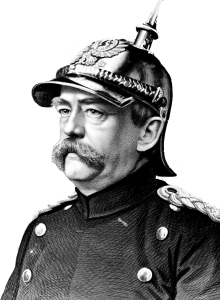
Many Americans have never heard of Otto von Bismarck. More people are probably familiar with the World War II battleship Germany named after him. In Germany, he is regarded as a national hero.
In fact, Otto von Bismarck was one of the most famous politicians in history and a critical historical figure in the formation of Germany and Europe as we know it today.
In the mid-1800s, Germany didn’t exist. Instead, what is now Germany was a hodgepodge of states surrounded by powerhouses like Russia, France, England, and Austria. Bismarck is credited with the unification of Germany into a country of equal power with its neighbors.
Bismarck was a brilliant negotiator who carefully planned all his strategies well in advance. Through clever diplomacy and tactics, he methodically convinced each of the small German states that it would be in their best interest to unite to balance the power in Europe.
Most importantly, he always crafted detailed contingency plans in case his original approach was unsuccessful. Bismarck had to appease dozens of rival parties, often with conflicting interests. His contingency plans resulted in achieving his ultimate goals for each specific situation.
He became so famous for his clever contingencies that the concept of backup plans became known as “The Bismarck Plan,” and ultimately “Plan B.”
It would be wise for you to manage your career like Bismarck handled his negotiations.
If you are like many people, you rely completely on your full-time job for income, health care benefits, and retirement plans. Most people don’t want to face the possibility of losing their job.
The reality is that people are losing their jobs at an alarming rate, and this isn’t a new problem. Companies are not loyal to their employees. If you expect loyalty, you could be bitterly disappointed.
In my family alone:
- My great-grandfather was fired after 29 years, 11 months, and three weeks of employment to avoid paying him a pension.
- My grandfather’s brother-in-law forced him out of a business partnership of over 15 years.
- My mom missed out on lifetime healthcare benefits because she was let go weeks before her 20-year milestone.
- My wife was dismissed after 19 years because she exposed her boss committing fraud.
- I have been laid off twice due to mergers and acquisitions.
These events didn’t just occur during a bad economy; they can happen at any time.
You always need a Plan B, no matter how secure you feel right now.
You have insurance for your life, your car, and your home. But do you have insurance for your career? What if something happens to your job?
The best time to create a Plan B is when you don’t need one. If you wait, it might be too late.
– Murray Beaulieu
P.S. Leave me your thoughts, comments, and questions below.
Comments
Pedro De Lemos
Good article. I live in Germany. We live in a time with a lot of possibilities.
Murray Beaulieu
Hey Rob- Glad to hear you had a Plan B. Keep up the good work…and thanks for the kind words.
David Wood
Dude this is a flippin’ sweet article!
Rob Fraser
I have always heard of ‘Plan B’ but didn’t quite know where it came from. I figured it came about when ‘Plan A’ went wrong. My 12 years in the Marines taught me to also make a ‘Plan C, D, and in extreme cases E’. Getting out of the Corps after 12 years a lot of people talked against it and a lot always asked me what my plan was. To be honest my plan changed about a million times (and my backup plans). We also have a few sayings “people who fail to plan, plan to fail” or my favorite 7 P’s. “Prior Proper Planning Prevents Piss Poor Performance!” When things are going great it’s hardly a thought in most people’s mind to plan for the worst. Life turned me upside down when after 8 years in the military, suffered through a drawn out painful divorce, lost my kids (moved to Florida with ex, I’m in CA) and if affecting my career in a big way. I started in on network marketing as a way to prepare for the transition into the civilian sector and I learned the hard way. Bottom line is while things are going great for you, plan for the worst. These things have a funny sense of timing. Thanks.
Murray Beaulieu
Thanks. Glad you liked it. And I didn’t even bring up his serious ‘stache.
Lucas Thompson
This post really hits home! Having a Plan B is so essential, especially in today’s uncertain job market. I’ve been in a similar situation where I thought my job was secure, only to be laid off unexpectedly. It’s encouraging to see content like this reminding us all to be proactive. Great job!
Alina Morales
I find this post interesting, but I’m not entirely convinced that planning ahead is always effective. Do you have any actual data or statistics that prove having a Plan B truly makes a difference in career outcomes? I’d love to see some concrete evidence.
Ravi Patel
I appreciate the historical references, but how would you suggest someone in their 20s start building a Plan B? It’s a bit overwhelming to think about starting something like a side business when there are already so many career uncertainties. Any tips?
Sarah Wellington
I must admit, while this post is insightful, it seems a bit too simplistic. Life is unpredictable, and having a Plan B doesn’t always work out. I’ve had three plans fail in a row. Sometimes, it’s just about adapting to the current situation.
Carlos Mejía
Hey Murray! It’s been ages since we last spoke. I hope you’re doing well. Loved this post! We should catch up soon—maybe you can tell me more about your Plan B strategy over coffee? Let’s connect soon!
Hana Suzuki
I remember facing a similar problem a few years ago. I lost my job due to a merger, and it was a really tough time. However, because I had already started freelancing on the side, I was able to make the transition smoother. Having a Plan B is indeed life-saving!
Ivan Kuznetsov
There’s a tool I’ve been using lately that might complement what you’ve discussed here. It’s called ‘CareerGuard,’ and it helps you track different opportunities while working full-time. I highly recommend giving it a try.
Nina Lopez
Thank you so much for sharing this! I’ve always been nervous about job stability, but this post has really motivated me to start thinking about long-term solutions for my career. I’ll be looking into side projects and freelance work for sure!